
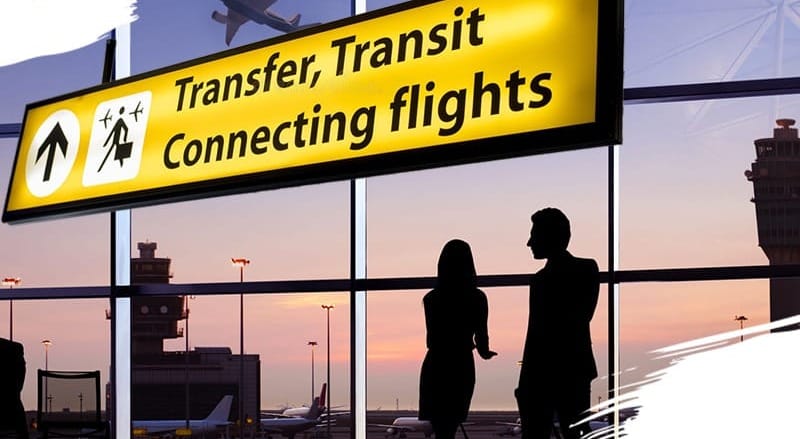
India has spent fifteen years watching Dubai, Doha, and Singapore build retail empires on the backs of its own passengers. Every rupee spent at Dubai Duty Free by a traveller from Varanasi or Raipur was a rupee that an Indian airport never got to compete for. The Civil Aviation Ministry's hub-and-spoke SOP, effective 1 June 2026, is the first structural attempt to change that arithmetic. The industry should pay close attention — because when India moves at scale, it moves everything.
India's Civil Aviation Ministry has issued a Standard Operating Procedure establishing a formal hub-and-spoke model for international air travel. Under the framework, passengers originating at designated spoke airports — beginning with Varanasi on 1 June 2026, followed by Raipur, Rajkot, Lucknow, Indore, and Goa — will complete immigration and customs clearance at their origin city. At the hub, baggage transfers airside without recollection. Two boarding passes are issued from the outset. DigiYatra biometric identification becomes mandatory for the international leg. Four airports are designated as international hubs: Delhi, Mumbai, and Bengaluru, with a fourth yet to be formally confirmed.
The policy rationale is explicit and commercial. India loses an estimated 40 million annual passenger transits to Gulf and Southeast Asian hub airports. Those passengers connect onward to Europe, North America, and East Africa through Dubai, Doha, Abu Dhabi, and Changi rather than through Indian cities — not because Indian geography is wrong, but because the procedural architecture made Indian hubs operationally uncompetitive. The SOP is designed to dismantle that architecture. The implications for travel retail extend far beyond aviation operations.
Travel retail is a dwell-time business. Dwell time is a function of passenger category. And the category of international transit passenger has, until this SOP, been structurally absent from every Indian airport. That absence is not an accident of demand — Indian passengers travel internationally in enormous volumes — it is an accident of policy. What the Ministry has done is create, by administrative fiat, an entirely new commercial passenger category at Indian airports.
The downstream consequences touch concession contracts, tender pipelines, duty-free commercial models, hub airport master plans, and — critically — the revenue assumptions underpinning GCC and Singapore duty-free operators whose footfall projections have long included Indian transit as a stable base. That base is now contested.
Five structural shifts follow. Not all of them are positive for incumbent players. Some represent significant exposure that the industry has not yet priced.
Transit traffic — a category Indian airports have never had
Indian hub airports currently operate on a binary model: arriving passengers and departing passengers. Each category has a defined commercial footprint — arrivals duty-free, pre-security retail, post-security departures retail. Transit passengers, who have cleared immigration elsewhere, require a third commercial architecture entirely: airside dwell retail designed for passengers with two to four hours, no checked-baggage stress, and confirmed onward boarding. This is the highest-yielding passenger category in global airport commercial terms. Indian airports have never designed for it, never tendered for it, and never measured it.
The SOP creates it overnight. Delhi and Mumbai will suddenly have an airside international transit population — small at first, but structurally growing — for whom no commercial proposition currently exists. A senior airport CCO observed at a recent industry briefing that the gap between a transit passenger's dwell potential and current Indian hub retail density is "not a gap, it is a canyon." The operators who move fastest to propose bespoke transit commercial formats — and the airports who fast-track those tenders — will capture a category advantage that compounds annually as spoke volumes grow.
The biggest concession opportunity in a decade
Varanasi, Raipur, Rajkot, Lucknow, Indore, Goa: none of these airports currently operate a meaningful international departures retail concession. Most have minimal post-security retail of any kind. The hub-and-spoke SOP does not merely add an international route — it mandates a full international departure experience at the origin. Immigration at the spoke means a dedicated international departures zone. That zone requires food and beverage, duty-free, and specialty retail concessions. These tenders do not exist yet. They will be issued. The wave is worth, by PaxIQ estimate, upward of $280 million in new concession value across spoke airports over a ten-year horizon.
For operators currently locked out of Indian airport concession growth — which is dominated by a small number of incumbents at the major hubs — spoke airports represent a structurally open market. Tier-2 and tier-3 airport authorities lack the in-house commercial sophistication to design complex concession structures, which means the operators who arrive early with credible formats and revenue-share models will define the terms. A senior duty-free trade director described it simply: "The airports that weren't on anyone's radar are suddenly the most interesting real estate in Indian aviation."
India has no institutional memory of operating true international transit. The SOP creates the framework, but the framework requires seamless coordination between immigration bureaus at spoke airports, CISF security, customs at hubs, airline ground handlers, and DigiYatra's biometric infrastructure — all simultaneously, across multiple cities, on a live flight operation. The June 1 Varanasi trial will be scrutinised intensely. A single high-profile baggage failure or immigration processing bottleneck in the first weeks will generate headlines that set political confidence back by months. The technical architecture of immigration clearance at origin with airside transfer at the hub is not uniquely Indian — Arlanda, Incheon, and Heathrow have variants — but those systems were built over decades. India is compressing that timeline aggressively.
The DigiYatra mandatory requirement for the international leg adds a further layer of complexity. DigiYatra's domestic rollout has been creditable but uneven. Extending biometric identity continuity from a tier-2 spoke airport through a major hub to an international gate requires integration that has not been publicly stress-tested at scale. Airlines operating the first spoke routes will absorb the bulk of operational risk — their ground handling SLAs, their check-in systems, their crew briefing protocols all need revision. The Ministry has the policy right. The execution question is whether the operational infrastructure is ready on the same timetable.
Things to carry away
- India has created a new commercial passenger category — international transit — that did not exist at any Indian airport before this SOP. The retail infrastructure to serve it does not yet exist either. That gap is the opportunity.
- Tier-2 and tier-3 spoke airports will issue their first international concession tenders within 18 months. Operators with flexible, scalable formats and a track record in emerging market airports are best positioned.
- GCC and Singapore duty-free operators carry material exposure to Indian transit traffic erosion. The impact is not immediate but is structural — and the market has not priced it.
- Indian duty-free and F&B operators must develop transit-specific commercial formats. A departing-passenger concession model applied to transit dwell time will underperform. New playbooks are required.
- Execution is the governing variable. If the Varanasi trial operates cleanly, the entire spoke pipeline accelerates. If it does not, the commercial opportunity is delayed — but it is not cancelled. The structural logic is too strong.